
Digital transformation in the healthcare sector continues to accelerate as the demand for faster, more accurate, and connected medical services increases. One of the key technologies driving this transformation is the Internet of Things (IoT). Through interconnected medical devices, IoT enables the collection and analysis of health data in real time, both within hospitals and beyond traditional healthcare facilities.
In the context of IoT in healthcare, this technology enhances operational efficiency while enabling healthcare professionals to deliver more personalized and preventive care. This article explores how IoT works in the healthcare sector, its key use cases, benefits, enabling technologies, and the challenges of implementation.
How Does IoT Work?
IoT works by connecting physical devices—such as medical sensors, wearable devices, and monitoring equipment—to the internet. These devices collect patient health data, including heart rate, glucose levels, and activity patterns, and transmit the data to a centralized system for processing.
The collected data is then analyzed through cloud platforms and analytics applications to generate insights that support healthcare professionals. With this approach, clinical decision-making can be performed more quickly, accurately, and based on real-time data.
IoT Use Cases in Healthcare

The adoption of IoT in healthcare continues to grow as the industry requires more connected and data-driven services, ranging from remote patient monitoring to the optimization of healthcare facility operations.
1. Remote Patient Monitoring (RPM)
RPM enables healthcare professionals to monitor patient conditions remotely through IoT devices. Vital patient data is transmitted in real time, allowing faster intervention without requiring frequent visits to healthcare facilities.
2. Glucose Monitoring
IoT-based glucose monitoring devices help patients with diabetes track blood sugar levels on an ongoing basis. This data supports physicians in adjusting treatment plans and reducing the risk of complications.
3. Heart-Rate Monitoring
IoT-enabled heart-rate sensors monitor cardiac activity in real time. These solutions are widely used for patients with cardiovascular risk factors.
4. Hand Hygiene Monitoring
IoT is used to monitor hand hygiene compliance among healthcare staff in hospitals. This helps reduce infection risks and improve patient safety standards.
5. Depression or Mood Monitoring
Wearable devices and IoT applications can observe sleep patterns, activity levels, and behavioral indicators to detect mood changes related to mental health conditions.
6. Parkinson’s Disease Monitoring
IoT supports continuous monitoring of Parkinson’s disease symptoms, such as tremors and movement patterns, enabling more precise treatment adjustments.
7. Connected Inhalers
Smart inhalers record usage frequency and environmental conditions, helping asthma patients manage their treatment more effectively.
8. Ingestible Sensors
Ingestible sensors enable internal health monitoring and medication adherence tracking, particularly for patients undergoing long-term treatment.
9. Connected Contact Lenses
Smart contact lenses can monitor eye health or glucose levels through tear fluid, enabling non-invasive diagnostic opportunities.
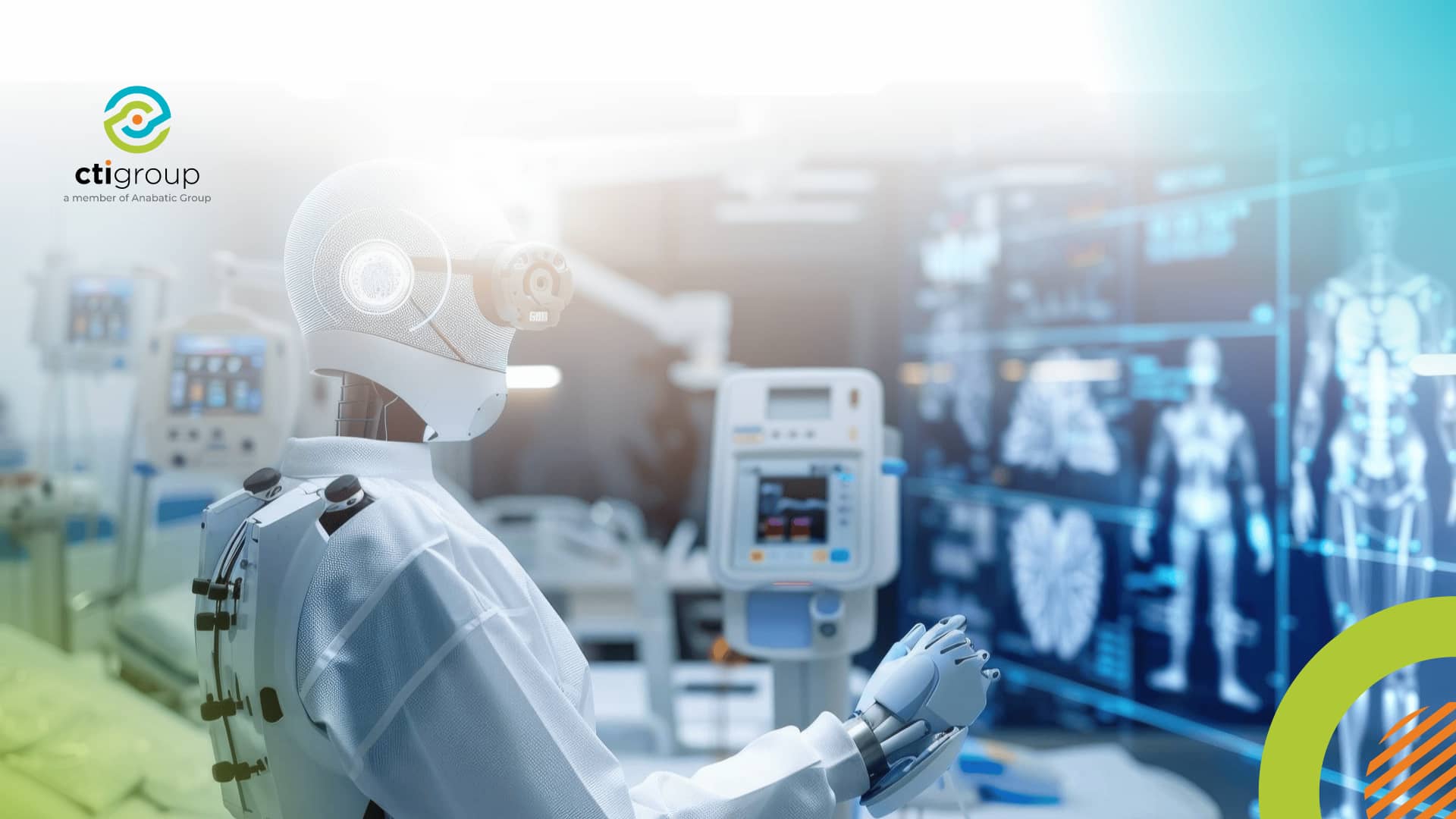
10. Robotic Surgery
In robotic surgery, IoT supports precision and remote-control capabilities, enabling more accurate procedures with reduced risk.
Benefits of IoT for Healthcare Providers and Patients
The implementation of IoT in healthcare has proven effective in improving care quality, accelerating data-driven clinical decisions, and supporting more preventive and efficient care models. This positions IoT as a strategic component in modern healthcare system transformation.
For patients, IoT enables more personalized healthcare services, continuous health monitoring, and improved quality of life through early detection and preventive care.
Read More: The Difference Between IoT and IIoT: Which One is Right for Your Business?
Technology Foundations for IoT Healthcare Implementation
Successful IoT healthcare implementation requires a combination of integrated and reliable technologies. The following key components play an essential role in ensuring that IoT systems operate optimally, securely, and in support of healthcare operations.
Wireless Communication: The Backbone of IoT
Wireless connectivity serves as the foundation of IoT, ensuring that medical devices can communicate in real time with stable and reliable connections.
Cloud Computing: The Data Management Hub
Cloud platforms act as the central hub for IoT data storage and processing, enabling scalability, system integration, and advanced analytics.
AI: The Key to Reliability
Artificial intelligence enhances IoT data analysis by identifying patterns, generating insights, and supporting more informed clinical decisions.
Read More: WiFi 7: The Next Generation of Wireless for Maximum Speed
Implementation Roadmap Planning
IoT implementation planning must be conducted in a phased and structured manner to minimize risks and ensure long-term sustainability.
1. Assessment of Existing Systems (1–3 Months)
Evaluating infrastructure, IT systems, and organizational readiness is a critical first step prior to IoT adoption.
2. Strategic Planning and Goal Setting (1–2 Months)
Defining business and clinical objectives ensures that IoT initiatives align with organizational priorities.
3. Establishing a Robust Network Infrastructure (3–6 Months)
Building a secure and stable network capable of handling IoT data traffic is essential.
4. Cybersecurity and Regulatory Compliance Setup (2–4 Months)
Implementing security measures and regulatory compliance frameworks protects sensitive healthcare data.
5. Developing and Testing IoT Solutions (6–12 Months)
IoT solutions are developed and tested to ensure system reliability and performance.
6. Full-Scale Deployment (3–6 Months)
IoT solutions are deployed across healthcare operations at scale.
7. Continuous Monitoring and Optimization (Ongoing)
Ongoing monitoring is required to maintain performance and continuously improve system effectiveness.
Challenges in IoT Healthcare Implementation

IoT healthcare implementation presents several challenges that must be addressed throughout planning and operational phases, including:
- Patient data security: Particularly the protection of sensitive medical information from cyber threats
- System interoperability: As IoT devices and platforms often come from multiple vendors
- Infrastructure readiness: Including network capacity, bandwidth, and system stability
- Healthcare regulatory compliance: Which requires adherence to data protection standards and policies
- Initial investment costs: Covering devices, infrastructure, and system integration
- Availability of skilled human resources: Professionals capable of managing and maintaining IoT systems.
Enabling IoT Healthcare Implementation with CTI Group
CTI Group supports IoT healthcare implementation through an end-to-end approach, covering planning, infrastructure provision, system integration, and data security. With experience across multiple industries, CTI helps healthcare organizations build reliable and scalable IoT solutions.
Contact our team through this link to discuss further and learn how CTI Group can support your organization in implementing secure, integrated IoT healthcare solutions that enable sustainable healthcare transformation.
Author: Moyna Farla Tsabitah
CTI Group Content Writer Intern

