
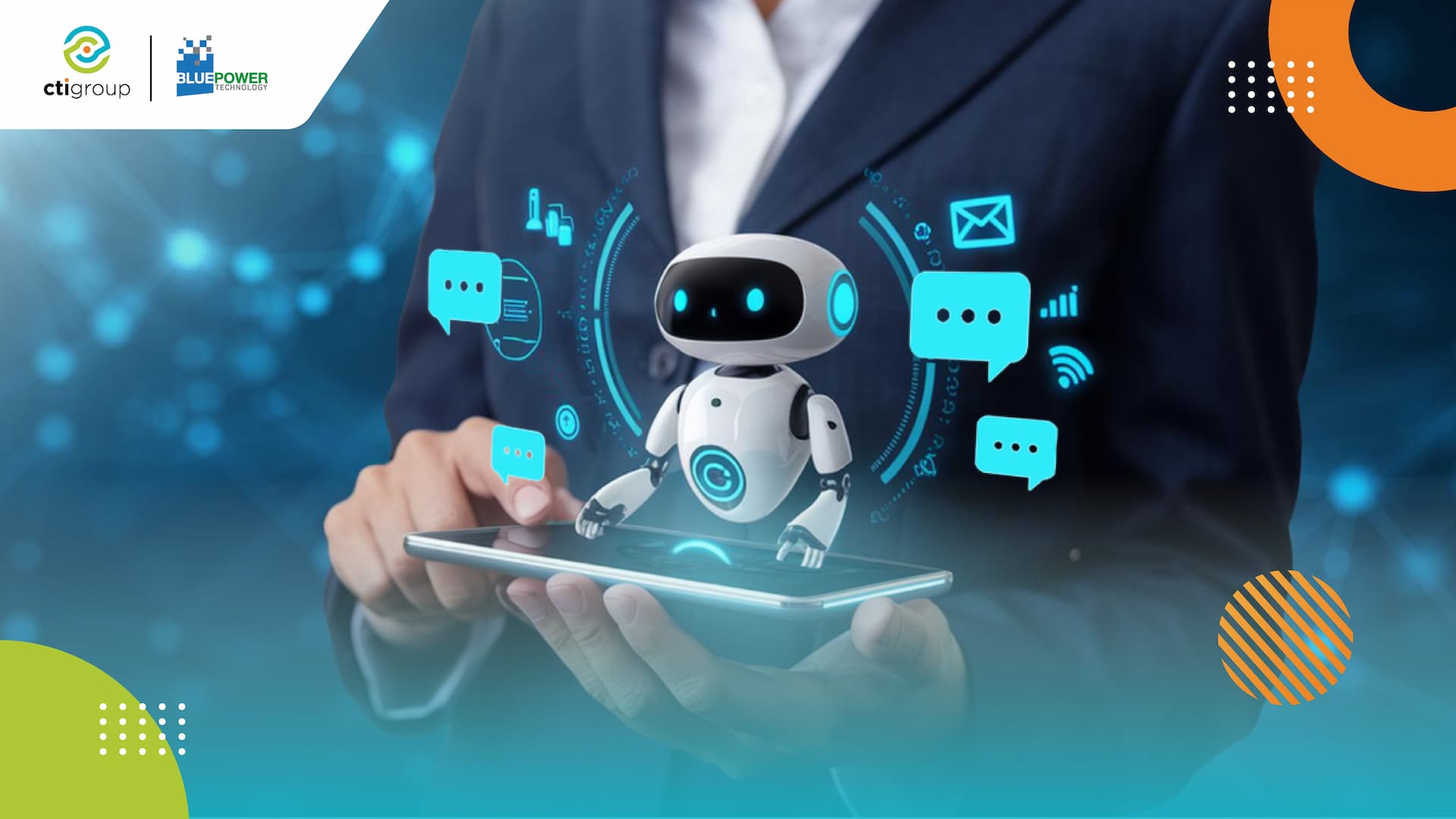
Over the past few years, we’ve seen AI evolve at a pace that once felt impossible. What started as Generative AI, tools that create text, images, or code, has now grown into something far more powerful: AI systems that can act, not just respond. They can set objectives, build step-by-step plans, call external tools, and execute complex workflows without human guidance at every turn.
This new wave is known as Agentic AI, and analysts are calling it one of the most strategic technological shifts of the decade. Its promise lies in the ability to automate multi-step processes end-to-end and fundamentally change how organizations operate.
This evolution marks a major turning point. AI is no longer just a passive system waiting for user prompts. It is becoming an active, autonomous agent, one that can interact, adapt, and collaborate to accomplish increasingly complex goals.
What Is Agentic AI?
At its core, Agentic AI refers to AI systems equipped with autonomous capabilities. Instead of simply providing answers, an AI agent can define its own goals, map out the steps needed to reach them, make informed decisions, access APIs or external tools, and close the loop by executing tasks independently.
Most AI agents operate through a continuous, iterative cycle built on several key components:
Perception: The agent gathers information from its environment, through sensors, databases, user interfaces, and even unstructured sources, such as emails or documents.
Reasoning: Using a Large Language Model (LLM), the agent interprets the data, understands the context, and determines the best possible actions.
Planning: The agent breaks down a goal into smaller subtasks and crafts a strategy to achieve them efficiently.
Action: It carries out real operations: executing tasks, interacting with systems, triggering workflows, or making decisions.
Reflection: After completing an action, the agent evaluates the outcome. This feedback helps refine its next steps, allowing the system to continuously improve and adapt over time.
How Is Agentic AI Different from Agentic Automation?
Agentic AI refers to the cognitive side of an autonomous system, its ability to reason, prioritize goals, and decide what actions to take. Think of it as the “brain.”
Agentic Automation, on the other hand, focuses on the execution layer, the practical application of that intelligence within business systems like ERP, CRM, or workflow tools to complete tasks end-to-end.
Put simply: Agentic AI provides the intelligence, while Agentic Automation delivers the integrated execution that makes that intelligence truly useful in real-world operations.
Agentic AI vs. Traditional RPA
Agentic Automation is often compared to (and increasingly combined with) classic Robotic Process Automation (RPA). While both aim to automate tasks, they differ significantly in how they approach execution.
Below is a simplified comparison:
| Key Aspect | Traditional RPA | Agentic AI |
| Core Logic | Rule-based, relies on strict if-then logic
| Goal-driven, powered by contextual reasoning and data. |
| Environment | Works best in stable, predictable, structured environments. | Operates effectively in dynamic, unstructured environments requiring contextual understanding.
|
| Execution | Follows scripts and fails when unexpected scenarios arise. | Adapt steps dynamically, adjust plans in real time, and ensure the overall goal is still met.
|
| Example | Generating daily reports or entering repetitive data. | Optimizing workflows, reprioritizing urgent tasks when conditions suddenly change.
|
Instead of choosing one over the other, many organizations now embrace a hybrid model:
- RPA handles structured, repetitive tasks
- Agentic AI manages exceptions, interprets context, and adapts intelligently
This combination brings together RPA’s speed and Agentic AI’s adaptive intelligence, creating an end-to-end automation pipeline that is faster, more flexible, and far more resilient.
The Advantages of Agentic AI and Agentic Automation
When implemented strategically, Agentic AI delivers powerful operational benefits across multiple functions.
1. Adaptive, Multi-Step Automation
AI agents can execute layered workflows, from gathering data, detecting anomalies, coordinating with external systems, to completing final actions without human instructions at every step.
They can also make real-time decisions, such as rerouting a delivery or escalating a ticket automatically when an anomaly is detected. This reduces operational delays and lifts the burden of repetitive tasks from human teams.
2. Scalability and Operational Efficiency
Because AI agents can interface across systems and integrate with enterprise platforms like ERP, organizations can expand automation coverage faster and with far less manual intervention.
By delegating routine execution to AI, human teams regain the time and bandwidth to focus on strategic decisions, product innovation, and areas that require empathy, judgment, or ethical consideration.
How Efficient Is Agentic AI for Modern Industries?
Agentic AI delivers the most transformative impact in industries that rely on real-time data and multi-step operational processes. In these environments, autonomous agents don’t just follow instructions; they analyze context, make independent decisions, and execute tasks end-to-end.
Supply Chain & Logistics
In supply chain operations, Agentic AI excels at optimizing delivery routes by combining multiple external variables: weather conditions, fuel prices, port congestion, and potential disruptions. When major incidents occur, such as route closures, agents can instantly calculate the most efficient rerouting scenario without waiting for manual intervention.
The result: more agile logistics, faster response times, and reduced operational costs.
Manufacturing
In manufacturing, Agentic AI is widely used for predictive maintenance and production line optimization. Agents can forecast component failures, schedule maintenance autonomously, and even trigger spare-part procurement.
This end-to-end automation aligns with Gartner’s Strategic Technology Trends 2025, positioning Agentic AI as a key driver for next-generation process automation.
Proper implementation significantly reduces downtime while improving changeover efficiency.
Customer Service
In customer service, agents act as virtual coordinators who manage ticket triage from start to finish. They read ticket content, gather contextual data, and resolve simple cases independently.
For more complex issues, agents escalate to a human operator, complete with a context-rich summary, enabling faster collaboration and improved response quality.
Risks, Challenges, and Why Caution Is Essential
Despite its advantages, Agentic AI also introduces operational, security, and compliance risks. Without proper governance, autonomous agents can turn into operational liabilities.
Here are the critical areas to consider.
1. Governance & Control
Granting agents autonomy requires clear policies: action boundaries, human-in-the-loop escalation conditions, kill-switch mechanisms, mission ownership, and complete audit trails.
Weak governance may lead to unauthorized actions, incorrect decisions, or configuration errors.
2. Model Errors & Hallucination
An agent’s autonomy becomes risky when decisions are derived from inaccurate models or flawed data.
Quality metrics are needed to monitor hallucination frequency and response accuracy, along with corrective measures such as updating the knowledge base or integrating verification tools.
3. Security & Access Control
Since agents interact with multiple systems, strict access policies (least privilege), encryption, and activity monitoring are essential. Third-party API integrations also expand the attack surface, particularly if credentials leak or if the agent is given excessive privileges.
4. Operational Complexity & Observability
Multi-agent systems add complexity in areas such as error handling, fallback mechanisms, data consistency, and traceability.
Observability must go beyond infrastructure metrics and include insight into agent reasoning, decision-making patterns, and success in resolving user intent.
5. Regulation & Compliance (Emergent Behavior)
Agentic AI poses a regulatory challenge, especially under frameworks like the EU AI Act, due to its ability to demonstrate emergent behavior as agents learn and interact.
In highly regulated industries, compliance must be dynamic rather than static, with continuous validation to ensure reliability and accountability throughout the agent’s lifecycle.
Begin Your AI Transformation Journey with Blue Power Technology
Adopting Agentic AI and other critical IT solutions requires strategic planning and precise execution. As part of CTI Group and an authorized partner of leading AI and IT vendors, Blue Power Technology (BPT) is ready to support your organization end-to-end.
From AI governance consultation to the implementation of mission-critical solutions, BPT ensures that planning, integration, and after-sales support are aligned with your business needs, enabling effective and sustainable Agentic Automation.
Visit BPT’s official website to explore complete IT solutions and practical guidance for adopting Agentic AI.
Penulis: Pita Cindriyani Utami – Digital Marketing Specialist BPT
Editor: Wilsa Azmalia Putri – Content Writer CTI Group

