
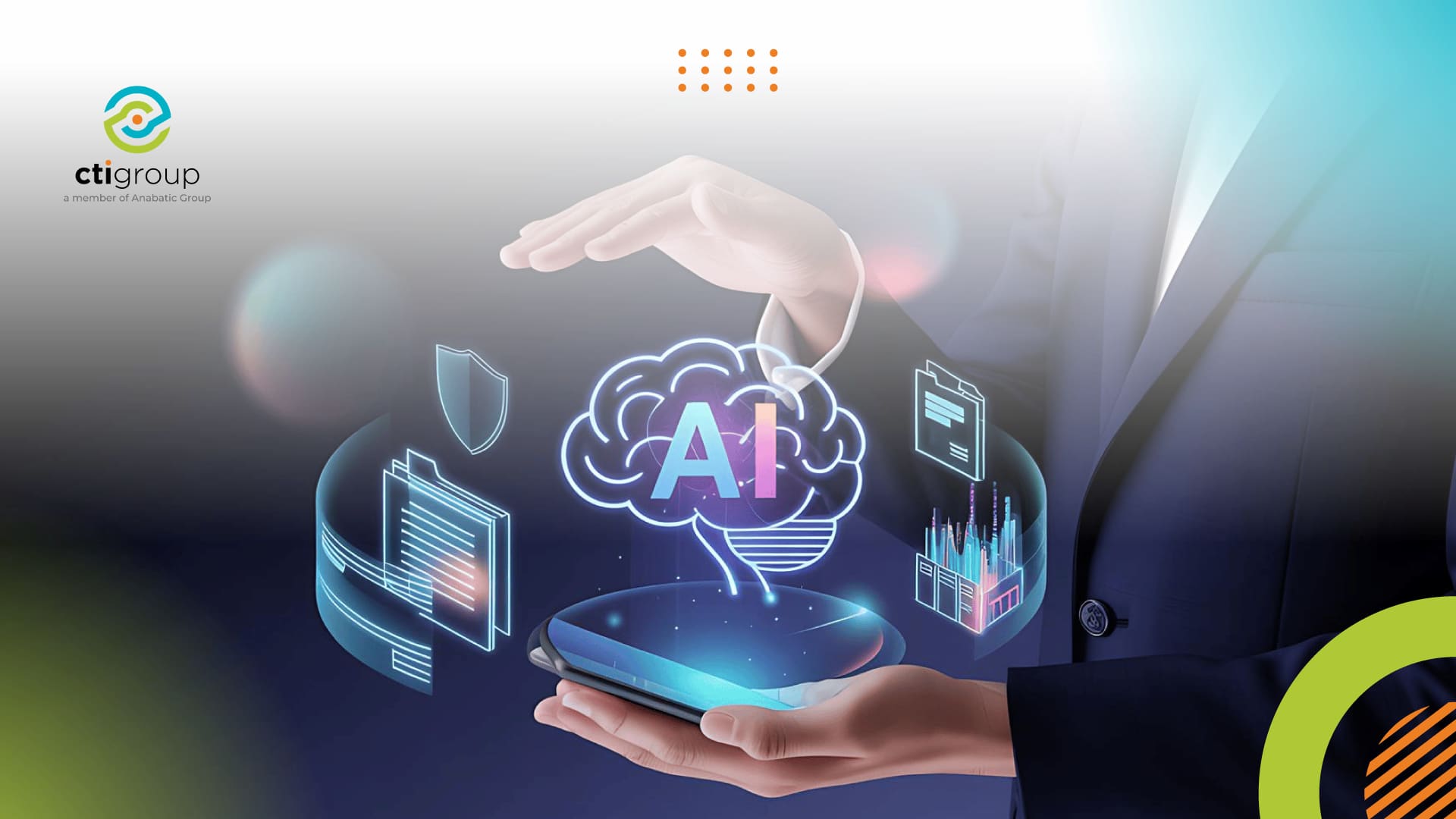
Artificial Intelligence (AI) continues to evolve. While AI previously functioned merely as a tool responding to human commands, its role has now expanded into a more autonomous collaborator. AI can not only understand instructions but also interpret objectives, devise plans, and execute tasks independently. This marks the beginning of the agentic AI era—a new phase in which AI actively participates in work processes, rather than merely producing output.
This development is a key differentiator between agentic AI and generative AI. Generative AI focuses on content creation or prompt-based analysis, whereas agentic AI is designed to act proactively within defined objectives and constraints. With its expanding role, organizations need to build agentic AI readiness to ensure its use remains safe, controlled, and responsible.
What Is Agentic AI: Definition and Its Impact on Organizations
Agentic AI refers to AI systems that function as autonomous AI agents—digital entities capable of interpreting objectives, devising action plans, and executing a series of tasks without continuous human intervention. This approach changes how AI is integrated into business and operational processes.
From Reactive AI to Goal-Driven Proactive Systems
Unlike reactive AI that only responds to inputs, agentic AI is proactive and goal oriented. These systems can monitor conditions, take initiative, and adjust actions based on achieved outcomes, driving efficiency, and faster decision-making.
How Agentic AI Makes Decisions, Plans, and Executes
Agentic AI operates through AI agent workflows that combine reasoning, planning, memory, and execution capabilities. With this approach, AI does not just provide recommendations but can execute end-to-end processes across systems in a coordinated manner.
The Impact of AI Evolution on Workflows, Trust, and Accountability
Increasing AI autonomy directly affects how organizations build trust and establish accountability. When AI begins to perform tasks independently, monitoring mechanisms, auditing, and role clarity are necessary to ensure that every decision remains accountable.
Core Organizational Foundations for the Agentic AI Era
Agentic AI readiness cannot be achieved through siloed approaches. It requires the integration of digital foundations, human competencies, and organizational frameworks that support each other.
Digital Readiness: Data, Systems, and Automation
Autonomous agentic AI requires reliable data, interconnected systems, and sufficient automation maturity. Without a strong digital foundation, agentic AI’s ability to act accurately and consistently will be limited.
Human Readiness: Critical Thinking, Oversight, and Prompt Literacy
Even as AI becomes more autonomous, human roles remain crucial as overseers and final decision-makers. Critical thinking, understanding context, and directing and evaluating AI behavior are essential competencies in this era.
Organizational Readiness: Boundaries, Governance, and Escalation Mechanisms
Organizations need to establish clear operational boundaries for AI, including rules on when AI can act independently and when human intervention is required. Governance frameworks and escalation mechanisms are key to maintaining control and mitigating risks.
Read Also: Behind the Hype: Why Agentic AI Is Becoming the Next Big Game Changer
Redefining Work Structure and Roles in the Agentic AI Era
The implementation of agentic AI will change work structures and the distribution of responsibilities within organizations. Repetitive, rule-based operational tasks are increasingly delegated to AI, while humans focus on strategic decision-making.
Tasks Delegated to AI vs. Humans

Agentic AI is highly effective for handling standardized, execution-oriented processes. Conversely, tasks requiring ethical judgment, empathy, and strategic decision-making remain the responsibility of humans.
New Roles: AI Supervisors, AI Strategists, and AI Risk Owners
As AI autonomy increases, new roles emerge, such as AI supervisors, AI strategists, and AI risk owners. These roles ensure that agentic AI implementation aligns with business objectives and organizational policies.
Accountability in a Semi-Autonomous System
In semi-autonomous systems, accountability must be explicitly designed by defining who sets AI objectives, who monitors agent performance, and who is responsible for decisions and outcomes, ensuring that increased AI autonomy remains within the framework of governance, policies, and business goals.
Agentic AI Readiness Strategy Without Excessive Complexity
Preparing an organization for the agentic AI era is not just about building complex systems or replacing existing architecture. A more effective approach involves starting gradually, fostering organizational readiness, and emphasizing fundamental AI principles. Here are the key elements to consider:
- Focus on principles, not tools: Establish transparency, human oversight, and clarity of purpose as foundational elements.
- Start from workflows, not full system transformation: Implement AI agent workflows incrementally and in a controlled manner.
- Culture matters more than technology: Mindset readiness and human–AI collaboration are key factors for long-term success.
With this approach, organizations can build agentic AI readiness sustainably without overengineering while maintaining control.
Read Also: Gartner Technology Trends 2026: Digital Strategy for Enterprises in the Agentic AI Era
Risks of Agentic AI Unpreparedness for Organizations
Failing to prepare an organization for the agentic AI era not only risks technological lag but also directly impacts operational stability, human resource readiness, and strategic business relevance.
Operational risk: Without adequate readiness, autonomous systems may operate without proper oversight, increasing the risk of errors or compliance issues.
Talent gap: Lack of a strategy for developing agentic AI competencies risks widening the talent gap.
Strategic irrelevance: Organizations risk falling behind competitors in speed, innovation, and scalability.
Ultimately, without structured readiness, agentic AI will not drive business value but instead become a new source of organizational risk.
Prepare Your Organization for Agentic AI with CTI Group
Agentic AI readiness is a continuous capability, not a short-term solution. Preparing an organization comprehensively—from technology, people, to governance—is key to leveraging autonomous AI safely, effectively, and responsibly.
CTI Group is ready to support your company in building a comprehensive digital strategy, spanning AI, security, and data management. With proven experience and strong global partnerships, CTI helps enterprises in Indonesia strengthen competitiveness and accelerate innovation in the agentic AI era. Contact our team through this link to discuss further and discover how CTI Group can help your organization proactively prepare for the agentic AI era.
Author: Moyna Farla Tsabitah
CTI Group Content Writer Intern
