
Technology investment decisions are becoming increasingly complex. Companies need to continue developing their digital infrastructure and adopting new technologies to remain competitive. However, economic uncertainty, rising financing costs, and changing market conditions mean that every investment must be carefully evaluated based on business needs, potential returns, and long-term value.
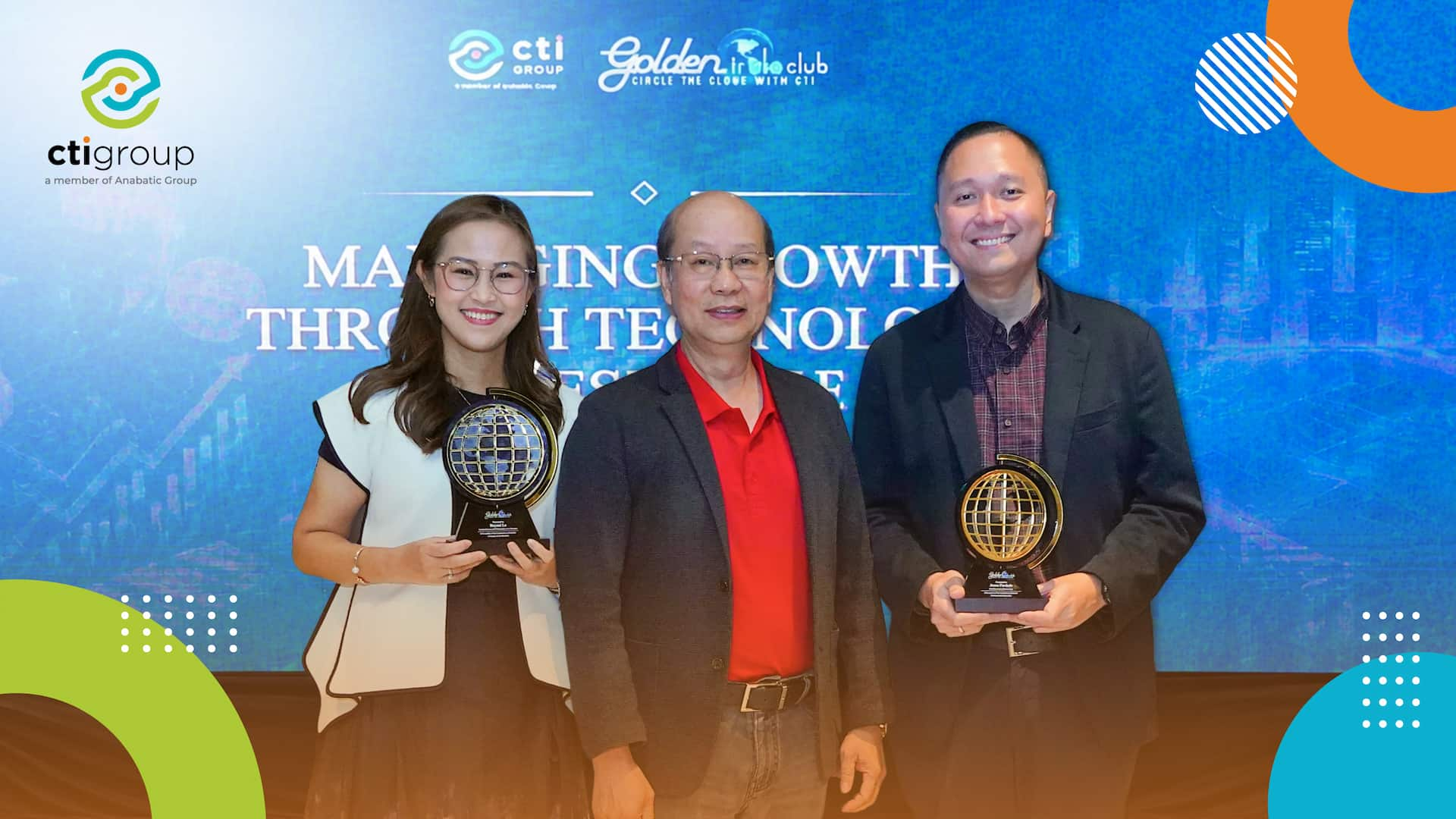
These considerations were among the topics discussed at the 2026 Golden Circle Club (GCC) Executive Roundtable, hosted by CTI Group. Under the theme “Managing Growth Through Technology Investments in a Volatile Economy,” the forum brought together technology business leaders to discuss economic outlooks and investment strategies for navigating market conditions toward 2027. The discussion was moderated by Royani Lo, President Director of PT Helios Informatika Nusantara, a CTI Group subsidiary, with Josua Pardede, Chief Economist at Permata Bank, as the keynote speaker.
IT Industry Growth Prospects Amid Economic Uncertainty
Indonesia’s economy grew by 5.29% year-on-year in Q2 2026, moderating from 5.61% in the previous quarter. Against this backdrop of slower economic growth, the information and communication sector expanded by 6.97%, outpacing overall national economic growth. The sector was also the fourth-largest contributor to economic growth during the period.
Growth opportunities are also evident in Indonesia’s cloud market. Josua Pardede shared that the market was estimated to be worth US$2–3 billion in 2024, with a projected compound annual growth rate (CAGR) of 14% through 2029. Growing demand for digital services and the infrastructure that supports them creates opportunities for industry players to expand their businesses in this segment.
However, stronger growth in the information and communication sector does not necessarily translate into uniform growth across all IT business segments. Several IT service companies continued to report revenue declines in Q2 2026, although the contractions were smaller than in the previous quarter. Meanwhile, growing demand for AI infrastructure is driving demand for high-performance memory, affecting hardware availability and costs.
Also Read: The Rise of Agentic AI Indonesia: What 2026 Will Demand from Leaders?
Six Global Economic Factors Affecting the IT Industry Toward 2027
The IT industry’s growth prospects remain closely tied to global economic conditions, which continue to face various uncertainties. During his presentation at GCC 2026, Josua identified six factors that could influence the global economy throughout 2026–2027:
- Geopolitical tensions in the Middle East. Prolonged conflicts risk disrupting energy distribution, particularly if key oil trade routes such as the Strait of Hormuz are affected. Such disruptions could drive up oil prices and add to global inflationary pressures.
- China’s economic slowdown. As one of the world’s major trade and manufacturing hubs, a slowdown in China’s economy could weaken global demand, including demand for commodities and industrial products.
- High financing costs. Fiscal pressures and tight monetary policies could keep interest rates elevated. This would increase borrowing costs and limit companies’ capacity to finance business expansion.
- Potential El Niño conditions. Changing weather patterns could disrupt food production and energy supplies. These disruptions may drive up commodity prices and add to inflationary pressures.
- Trade wars and trade fragmentation. Escalating tariffs and shifts in trade policies could reshape global supply chains, making it more challenging for companies to maintain operational efficiency and supply certainty.
- US–China technology rivalry. Competition between the two countries in AI development and strategic technologies could influence industrial policies, technology restrictions, and investment priorities in digital infrastructure.
For IT industry players, these factors could affect procurement costs, component availability, and customer investment decisions. Supply chain uncertainty and high financing costs, for example, may prompt companies to take a more cautious approach to expansion plans and technology budgets.
IT Business Growth Is About More Than Sales
For technology distributors and resellers, rising market demand does not always translate into higher profitability. One challenge is that products are often procured in foreign currencies, while customer payments are generally received in Indonesian rupiah. Exchange rate fluctuations can therefore affect procurement costs and profit margins.
“When products are purchased in US dollars while customer payments are received in rupiah, exchange rate fluctuations can affect procurement costs and profit margins. Managing foreign exchange risk, including through hedging instruments, is therefore an important aspect of maintaining business sustainability,” Josua explained.
Beyond foreign exchange risks, companies also need to manage inventory efficiency and working capital. Additional stock and service capacity should be aligned with project requirements and customer demand to avoid placing unnecessary pressure on company finances.
Rethinking Technology Investment Priorities Toward 2027
As digital needs continue to evolve, companies must ensure that technology investments align with their business priorities. Key areas expected to remain in focus in 2027 include cyber resilience, data and AI consolidation, cloud computing, application modernization, and automation.
However, setting investment priorities should involve more than simply following technology trends. AI initiatives, for example, should start with clearly defined use cases and measurable outcomes.
Cloud investments also need to account for workload characteristics and operational requirements. Meanwhile, cybersecurity solutions should be tailored to each organization’s risk profile and regulatory obligations.
During the Executive Roundtable session, Royani Lo emphasized the importance of understanding customer needs before proposing technology solutions, particularly given the different requirements across industries. Banking and financial services need stronger security and data protection. Manufacturing and logistics have opportunities to improve automation and integrate operational systems, while the healthcare sector requires data interoperability and reliable infrastructure.
For IT industry players, this approach creates opportunities to develop more integrated offerings. Business opportunities are not limited to supplying hardware or technology licenses; they also lie in understanding customer needs and integrating relevant solutions to address operational and business challenges.
Also Read: Beyond Detection: How AI Helps Financial Institutions Move from Fraud Alert to Fraud Action
GCC 2026: The Second Year of the Executive Roundtable
Now in its second year, the Golden Circle Club (GCC) Executive Roundtable reflects CTI Group’s commitment to strengthening collaboration with its business partners. Rachmat Gunawan, CEO of CTI Group, highlighted the importance of building closer relationships and creating opportunities for mutual growth amid changes in the technology industry.
Through GCC, CTI Group continues to provide a platform for technology business leaders to exchange perspectives, strengthen relationships, and develop collaborations that create value for the broader industry ecosystem.
Author: Eribka David – PR & Media Communication, CTI Group
