

As data volumes grow, AI adoption accelerates, and businesses face increasing pressure to move faster, enterprise computing needs are becoming more complex. Relying on a single computing environment may no longer be enough to meet diverse requirements, from real-time data processing to the management of sensitive information.
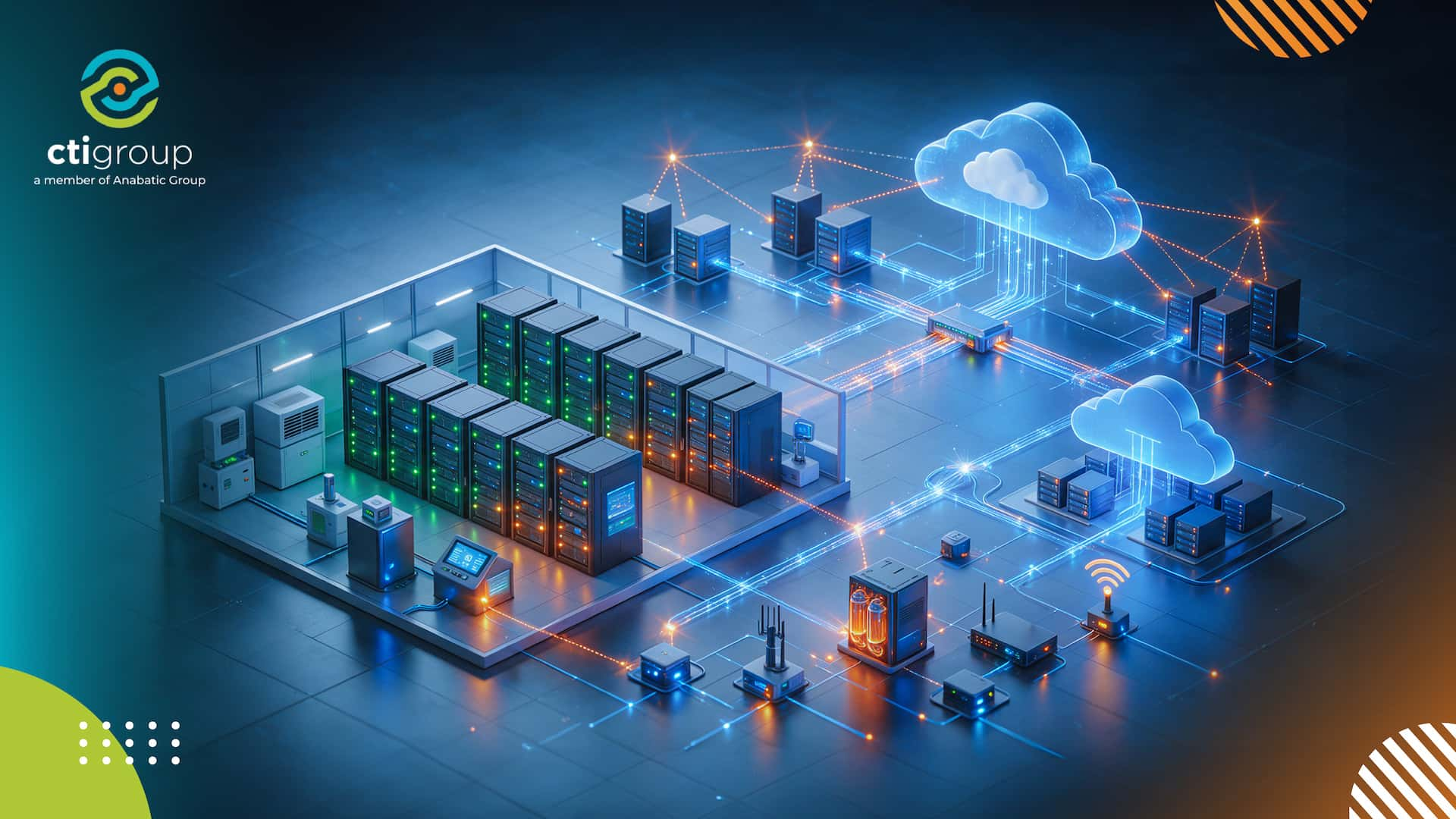
This is where a hybrid computing strategy comes into play. By combining on-premises infrastructure, private cloud, public cloud, and edge computing, businesses can place workloads in the environments best suited to their performance, scalability, cost, and data control requirements. This approach goes beyond combining different technologies; it creates an infrastructure that can adapt to evolving business needs.
What Are the Key Elements of a Hybrid Computing Architecture?
An effective hybrid computing architecture consists of integrated computing environments, optimized workload management, and consistent security mechanisms. These elements ensure that different infrastructure environments work seamlessly together to support business operations.
On-Premises, Private Cloud, and Public Cloud
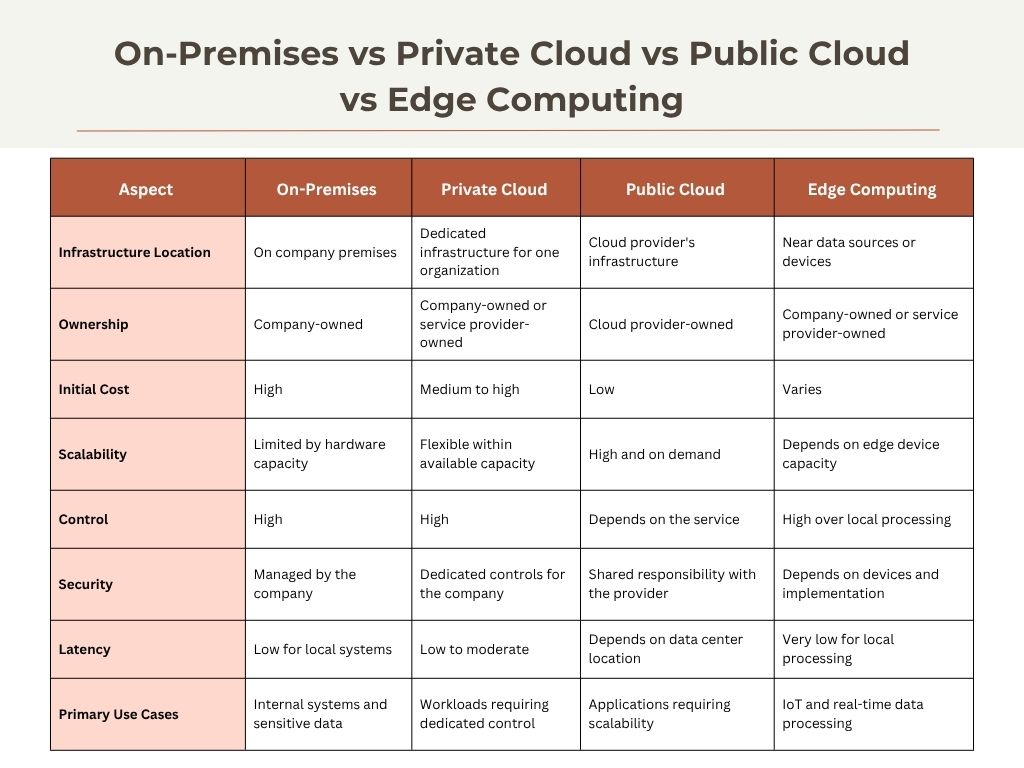
On-premises infrastructure provides greater control over infrastructure and data, making it suitable for workloads that require low latency or strict security. However, expanding capacity requires additional hardware investment.
Private cloud offers a dedicated and flexible environment, while public cloud provides on-demand computing capacity without requiring significant upfront infrastructure investment. These environments can be combined based on workload requirements, data sensitivity, and budget.
For example, a business could process sensitive transactions on-premises, run internal applications in a private cloud, and perform data analytics in a public cloud.
Edge Computing, Workload Orchestration, and Security
Edge computing processes data closer to its source, such as industrial sensors and IoT devices, enabling faster issue detection and reducing latency. In manufacturing, AI can detect product defects directly on the production line, helping reduce defective output and accelerate quality inspections.
Workload orchestration determines where workloads should run based on capacity, performance, and cost requirements. This helps businesses optimize resource utilization and avoid unnecessary computing expenses. Meanwhile, access controls, encryption, and activity monitoring help protect data and reduce security risks across all environments.
On-Premises vs Private Cloud vs Public Cloud vs Edge Computing
How to Implement Hybrid Computing Strategy Without Adding IT Complexity
Implementing a hybrid computing strategy should start with business needs, rather than simply adopting new technologies. Before selecting an architecture, businesses need to understand their workload characteristics, existing infrastructure, security requirements, and performance and cost targets.
1. Workload Assessment and Placement
Map workloads according to their computing requirements, data sensitivity, latency needs, and resource usage patterns to determine the most suitable environment, whether on-premises, private cloud, public cloud, or edge. For example, stable and sensitive workloads can remain on internal infrastructure, while analytics workloads with fluctuating demand can leverage public cloud. Regularly review workload placement to optimize costs, performance, and capacity as business needs evolve.
2. Infrastructure Integration and Management
Integrate network connectivity, access controls, and monitoring through a centralized management platform and automation to simplify hybrid infrastructure management. Visibility into performance, capacity, latency, and costs helps IT teams identify bottlenecks faster, optimize resources, and maintain service availability.
3. Security, Governance, and Cost Optimization
Apply consistent security and governance policies, covering data classification, access controls, encryption, backup, and recovery. Monitor cloud spending, data transfer costs, licensing, and maintenance, then optimize capacity to prevent waste. Test disaster recovery scenarios as well to help protect data, control costs, and ensure business continuity.
Also Read: What are the Components of an AI Agent? Here are the 5 Core Elements
How Does Hybrid Computing Deliver Business Value?
Hybrid computing delivers business value by aligning infrastructure choices with operational needs, enabling companies to optimize costs, improve flexibility, and maintain efficiency. Here are some of its key benefits:
Cost Efficiency and Resource Optimization
Businesses can align their infrastructure with workload requirements, using cloud resources to accommodate fluctuating demand and internal infrastructure for stable workloads. This approach helps optimize resource utilization and reduce unnecessary capital expenditure. However, actual savings depend on managing total costs, including infrastructure, licensing, operations, and data transfers.
Performance, Scalability, and Flexibility
A hybrid computing strategy enhances performance and scalability by placing workloads in the most suitable environments. Cloud provides computing capacity on demand, while edge computing accelerates data processing for AI applications that require real-time responses.
Business Resilience and Data Control
Hybrid architecture helps maintain business continuity through data replication, backups, and recovery mechanisms in the event of disruptions. Businesses can also control data location and access based on security and compliance requirements, maintaining flexibility without losing control over sensitive information.
Also Read: AI Is Not Just a Trend: Here Are Smart Strategies to Integrate It into Your Business Applications
Adapting Hybrid Computing Strategies to Industry-Specific Challenges
The implementation of a hybrid computing strategy depends on the operational needs of each industry. In banking and financial services, for example, systems that process sensitive transactions may require strict controls, while cloud environments can support application development, analytics, and system testing in accordance with applicable policies.
In manufacturing, edge computing can process data from sensors and cameras on the production floor to support predictive maintenance, quality inspections, and machine monitoring. Large volumes of historical data can then be analyzed in the cloud to identify patterns and support operational planning.
Meanwhile, in retail and e-commerce, hybrid infrastructure can support transaction processing, inventory management, customer behavior analytics, and traffic spikes during promotional campaigns. In healthcare, this approach can help connect operational systems with data analytics, provided that information processing and access comply with applicable privacy requirements and regulations.
Ultimately, there is no single hybrid configuration that works best for every organization. Businesses need to consider their operational scale, workload characteristics, user locations, AI requirements, and IT team capabilities. Regular evaluations help ensure the architecture remains relevant as technology and business priorities evolve.
Build a More Adaptive Hybrid Infrastructure with CTI Group
A hybrid computing strategy helps businesses balance performance, scalability, cost efficiency, and data control by combining on-premises infrastructure, private cloud, public cloud, and edge computing. However, successful implementation requires the right workload placement, seamless infrastructure integration, and consistent security and cost management.
Looking to build a hybrid infrastructure tailored to your business needs? Contact the CTI Group team to discuss your requirements and explore the right hybrid computing approach for your organization.
Writer: Angela Merici Retna Perwitasari
Content Writer Intern CTI Group
