
As AI moves from experimentation to enterprise scale, many organizations discover a hard truth. AI failure is rarely caused by the model itself, but by a lack of readiness across strategy, data, infrastructure, and people.
According to research from Cisco, only a small percentage of organizations are fully prepared to realize value from AI because most lack mature across multiple readiness pillars, not just technology. This gap explains why AI investments often stall at pilot stages without measurable business impact.
Studies from Accenture and Digital Education Council consistently show that scalable AI adoption depends on coordinated readiness across strategy, infrastructure, data, governance, talent, and culture. AI readiness is determined by six pillars foundation, including strategy readiness; infrastructure readiness; data readiness; governance and security readiness; talent and operational readiness; culture and change readiness that collectively define whether AI can be beyond experimentation.
The 5-Phase AI Readiness Roadmap
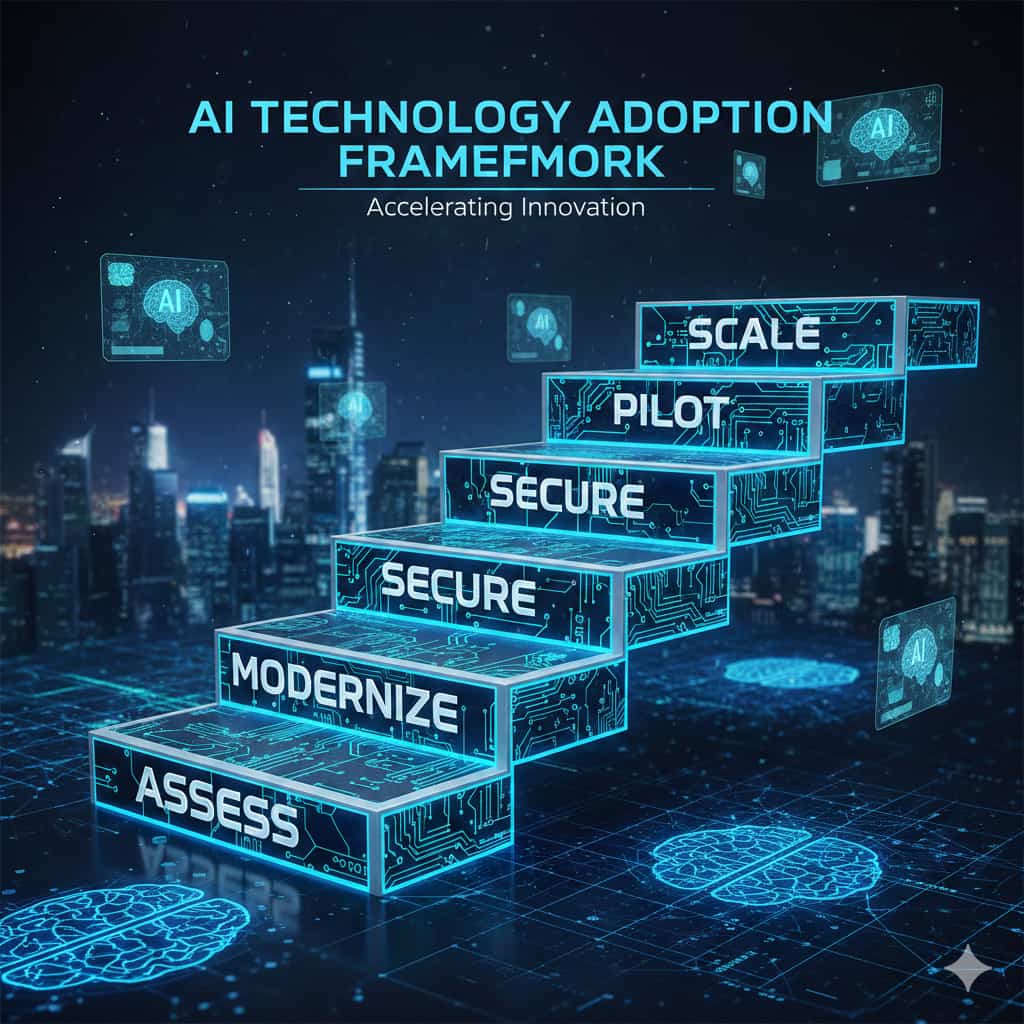
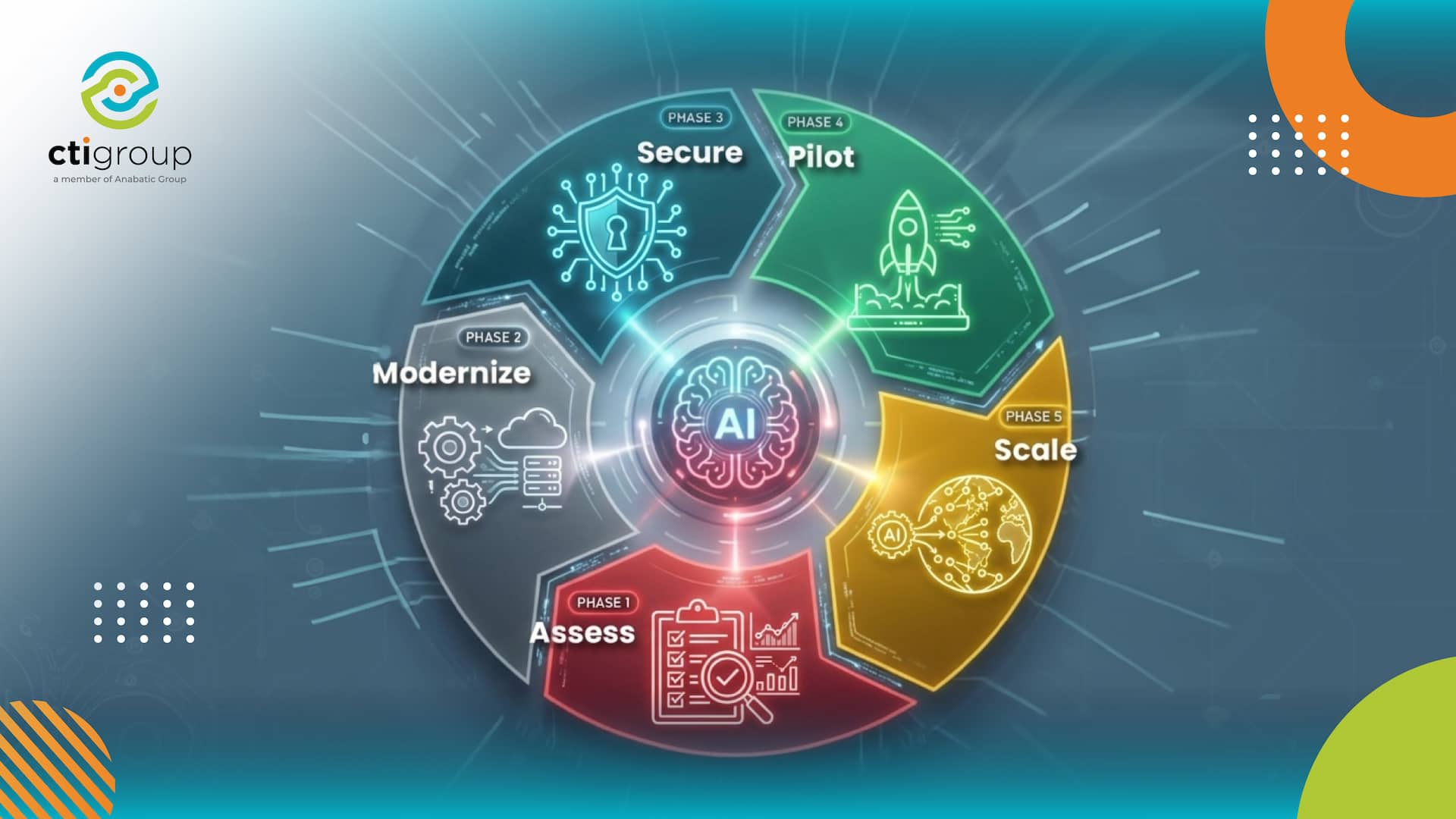
AI readiness in organization consists of five phases that can determine if it can fail or move beyond experimentation and deploy at scale. The five phase including assess, modernize, secure, pilot, and scale.
Phase 1: Assess
The first phase start when organizations begin by understanding their current state. Key activities include auditing infrastructure capacity and performance, evaluating data maturity and accessibility, reviewing cybersecurity and governance posture, and assessing operational processes and workforce readiness.
Phase 2: Modernize
Second phase where modernization prepare the technical foundation for AI. This phase includes upgrading compute for AI and high-performance workloads, modernizing storage and data platforms, implementing hybrid cloud architectures, and enhancing network performance and connectivity.
Phase 3: Secure
Security and governance are embedded before AI scales. Enterprises establish AI governance frameworks, implement secure by design infrastructure, strengthen compliance and data protection, and build resilient and sustainable operations.
Phase 4: Pilot
With a solid foundation in place, organizations move into controlled execution. They launch targeted AI and automation pilots, test infrastructure scalability, introduce AI driven operations, validate both performance and business value.
Phase 5: Scale
Successful pilots evolve into enterprise-wide adoption. AI is deployed across business functions, platform-based operations are standardized, automation and self-healing systems are embedded, and costs are optimized through disciplined financial governance.
Read Also: AI Readiness: The Critical Foundation for Enterprise Innovation Success
Enabling Enterprise Potential in the Era of AI with CTI Group
An effective AI readiness framework starts with honesty about where your organization truly stands. CTI Group helps enterprises take a clear, practical view of AI readiness by evaluating the foundations that matter most, including strategy, infrastructure, data, governance, and day to day operations. This approach ensures AI initiatives are designed to scale reliably, not struggle in production.
Through advisory services, structured AI readiness assessments, and deep enterprise technology expertise, CTI Group supports organizations in moving beyond isolated pilots toward sustainable AI adoption. The objective is not to deploy AI faster, but to build the right readiness framework so AI investments translate into measurable business outcomes.
If your organization is planning to scale AI, the first step is understanding your current level of readiness. Connect with our team to explore how an AI readiness framework assessment can help clarify priorities, reduce operational risk, and move forward with confidence.
Author: Ervina Anggraini – Content Writer CTI Group
