
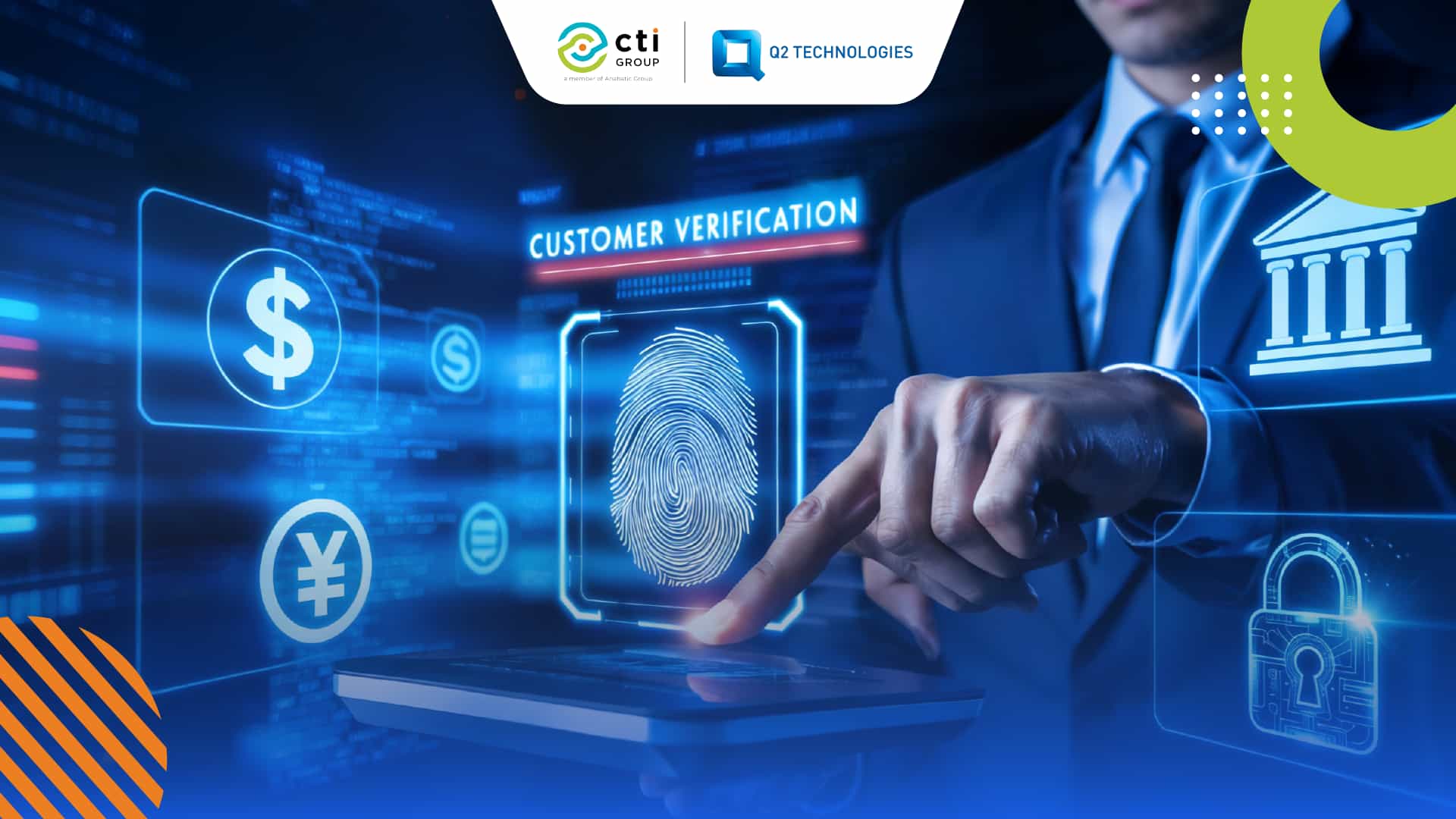
Digital transformation has reshaped how financial institutions serve customers. Customers can now complete processes such as account opening, loan applications, and service activation entirely online. However, alongside this convenience comes a growing challenge driven by the rapid advancement of Artificial Intelligence (AI).
While AI helps improve operational efficiency and customer experience, fraudsters are also using it to bypass digital identity verification systems. Technologies such as deepfakes, voice cloning, synthetic identities, and AI-generated documents are making fraud attempts far more difficult to detect through conventional verification methods.
This trend is reflected in the growing number of AI-driven fraud cases worldwide. Several industry reports indicate that deepfake-related fraud attempts have surged significantly in recent years, reaching exponential growth in some regions (Sumsub, 2024). Other reports also show that more than 50% of modern fraud patterns now involve AI and hyper-realistic impersonation as primary methods for bypassing digital security systems (Fintech Finance News, 2025).
One notable case involved fraudsters using deepfake videos and synthetic identities to impersonate legitimate users during the onboarding process for digital financial services. By leveraging generative AI, fraudsters can manipulate faces, voices, and identity documents to appear highly realistic, making them difficult to identify through traditional verification systems. Some financial organizations have even acknowledged that conventional KYC systems are not fully prepared to address AI-generated identity and document threats.
This shift highlights a growing reality for financial institutions. KYC is no longer just an administrative process designed to fulfill regulatory requirements. It has become a critical foundation for maintaining trust, security, and the integrity of the digital financial ecosystem. As a result, AI-driven KYC is increasingly viewed as a necessity rather than an optional enhancement.
Why Are Digital KYC Solutions Important for Financial Institutions?
The digitalization of KYC is essentially a response to the growing complexity of digital identity management. More importantly, it helps financial institutions address three major challenges at once: fraud prevention, regulatory compliance, and customer experience.
Fraud Prevention Challenges
Traditional rule-based systems and manual review processes are becoming less effective at keeping pace with modern fraud tactics. Fraud is no longer isolated or opportunistic. It is increasingly organized, adaptive, and often supported by AI technologies.
Identities can now be fabricated, manipulated, or entirely generated within a short period of time. As a result, document-based verification alone is no longer sufficient to validate user authenticity.
Regulatory & Compliance Pressure
Regulatory pressure also continues to increase. Financial institutions are required to consistently implement Customer Due Diligence (CDD), Anti-Money Laundering (AML), and various other compliance obligations.
Manual processes are not only time-consuming but also prone to inconsistency and human error. In addition, the high volume of alerts generated by traditional monitoring systems often produces excessive false positives, forcing compliance teams to review activities that are legitimate.
Over time, high alert volumes can lead to alert fatigue, where analysts become overwhelmed by repetitive notifications and may overlook genuinely suspicious activities. Several industry studies have shown that most AML alerts in financial institutions eventually turn out to be false positives, affecting both operational efficiency and the quality of investigations.
Customer Experience Expectations
At the same time, financial institutions must maintain onboarding experiences that are both fast and seamless. Lengthy verification procedures often cause prospective customers to abandon the registration process before completion.
On the other hand, overly simplified verification flows may create security gaps that fraudsters can exploit. Maintaining the balance between security and convenience has therefore become increasingly important.
This is where AI-driven KYC becomes highly relevant. The technology helps institutions streamline onboarding while maintaining stronger verification standards and reducing potential fraud risks.
Key Components of AI-Driven KYC
Modern KYC approaches no longer rely on a single verification method. Instead, they combine multiple layers of technology to improve both accuracy and security throughout the identity verification process.
Advancements in AI have enabled KYC systems to become more adaptive, automated, and capable of responding to continuously evolving fraud patterns.
The process typically begins with identity verification, where documents such as national IDs or passports are analyzed automatically using OCR (Optical Character Recognition) and AI-based document analysis technologies. The system not only extracts information from documents, but also evaluates authenticity through indicators such as visual patterns, metadata, and signs of digital manipulation commonly found in forged documents.
However, document validation alone cannot confirm that the rightful individual is actually using the identity. To address this challenge, modern AI-powered KYC solutions often use biometric verification with liveness detection technology.
Using AI and computer vision, the system can verify whether the individual is physically present during the verification process rather than relying on photos, prerecorded videos, or synthetic facial simulations. The system analyzes indicators such as subtle facial movement, light reflection, skin texture, and image depth to distinguish real users from manipulated digital representations.
In practice, AI also plays a critical role in detecting more sophisticated threats such as deepfakes and spoofing attacks. Through multi-layer analysis, systems can identify manipulation indicators that are often difficult to recognize manually. This capability is becoming more critical as generative AI technologies continue to evolve and enable highly realistic fake identities.
Beyond onboarding, AI implementation in KYC has also evolved toward continuous risk monitoring. Systems can continuously analyze user behavior through behavioral analytics and machine learning-based risk scoring.
Data such as login activity, device usage, access location, and interaction patterns can be processed to identify anomalies or suspicious activities that may indicate fraud.
With this approach, KYC is no longer limited to one-time verification. Instead, it evolves into an intelligent risk assessment system capable of dynamically monitoring and evaluating risk throughout the entire customer lifecycle.
The Impact of AI-Driven KYC on Operational Efficiency and Regulatory Compliance
The implementation of AI-driven KYC solutions can significantly improve operational efficiency. By automating verification processes, financial institutions can reduce their dependence on manual reviews, which have traditionally become bottlenecks in onboarding workflows.
This not only accelerates verification processes but also helps lower operational costs. At the same time, AI enables systems to process large volumes of data consistently, reducing the risk of errors commonly associated with manual operations.
In many cases, AI implementation also helps reduce false positives, allowing compliance teams to focus on cases that genuinely require further investigation.
From a regulatory standpoint, digital KYC solutions provide clearer and more structured audit trails. Every verification process can be recorded and traced, making audits and regulatory reporting more efficient and transparent.
Equally important, these implementations also improve customer experience. Faster and more intuitive verification flows allow prospective customers to complete onboarding without navigating unnecessarily complicated procedures. This has become an important factor in improving conversion rates in today’s fast-moving digital environment.
From Verification to Intelligent Decision-Making: The Evolution of KYC in the AI Era
Technological advancements show that KYC is undergoing a significant transformation. Previously focused solely on identity validation, KYC is now evolving into a broader data-driven decision-making system.
With AI support, organizations no longer ask only, “Is this identity valid?” They also assess whether this identity presents a potential risk. This shift is important because modern fraud often goes beyond what static data alone can reveal.
The concept also aligns closely with the rise of Agentic AI. In this approach, systems not only process information but also make adaptive decisions based on available data. In the context of KYC, systems can automatically assess user risk levels. Based on the results, they can determine whether users require additional verification, qualify for approval, or should be rejected.
This approach allows systems to adapt more effectively to evolving fraud patterns. AI models can learn from new behaviors, refine detection mechanisms, and respond to threats in real time without waiting for manual updates.
As AI-driven fraud becomes more sophisticated, financial institutions can no longer rely solely on traditional KYC approaches. Technologies such as deepfakes and synthetic identities have fundamentally changed the way cybercriminals manipulate digital identities. As a result, conventional verification systems face increasing challenges in maintaining their effectiveness.
AI-driven KYC offers a more adaptive and comprehensive approach. By combining identity verification, biometric analysis, and behavioral intelligence, financial institutions can build verification systems that not only support compliance requirements but also strengthen security and customer trust.
In today’s AI-driven threat landscape, KYC is no longer just part of onboarding. It has become a critical layer of trust, security, and risk management across the entire digital financial ecosystem.
To learn how AI-driven KYC solutions can help strengthen verification processes and fraud mitigation within your organization, please contact Q2 Technologies for more information.
Author: Jessica Sharon Putranto – Marketing Officer Q2 Technologies
Editor: Wilsa Azmalia Putri – Content Writer CTI Group
