
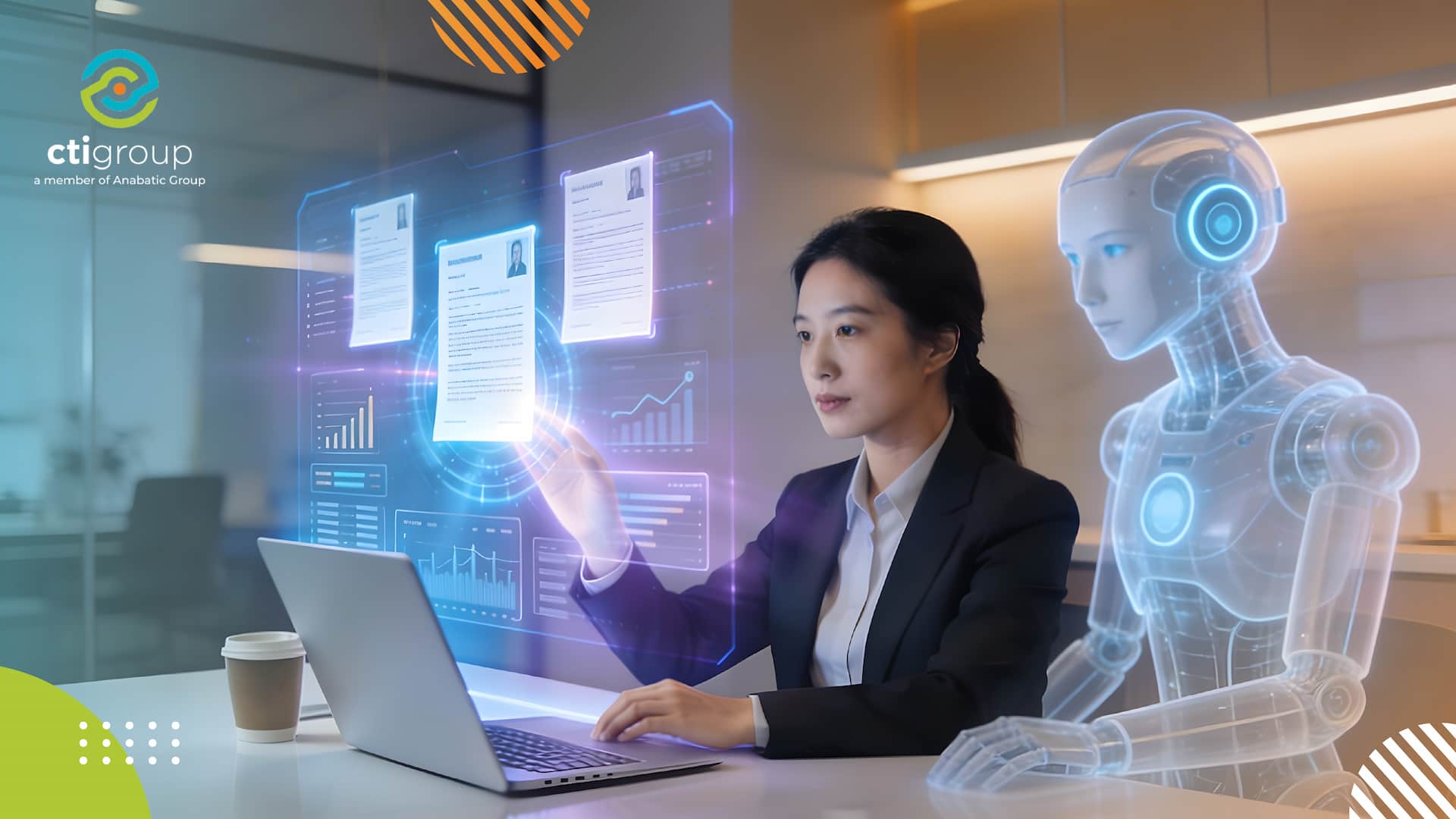
Imagine your HR team receiving hundreds of applications for a single position at the same time. Each resume needs to be reviewed, evaluated, and sorted manually—while the team is also managing other critical HR responsibilities.
As hiring demands continue to increase, resume screening can quickly become a challenge for modern organizations. HR teams need to identify the right candidates within a limited timeframe while ensuring that hiring decisions remain consistent and objective.
This challenge is becoming increasingly common as companies compete for top talent in a fast-moving job market. As a result, more organizations are turning to AI technologies to accelerate recruitment processes, improve operational efficiency, and empower HR teams to focus on more strategic initiatives.
Still Screening Resumes Manually? Here Are the Challenges

Although resume screening may seem like a straightforward process, manual screening comes with several challenges that can impact recruitment effectiveness.
The first challenge is time. Reviewing dozens or even hundreds of resumes for a single position requires significant effort. When applicant volume increases, screening can become a bottleneck that slows down the overall recruitment pipeline.
The second challenge is maintaining consistency in candidate evaluation. Different reviewers may assess candidates differently based on their experience, personal perspectives, or even the conditions when reviewing applications. Factors such as an attractive resume format or specific wording choices can unintentionally influence initial impressions.
The third challenge is the risk of overlooking qualified candidates. A resume that does not follow a standard format or does not contain the exact keywords used in a job description does not necessarily mean the candidate is unsuitable. However, in a manual process that depends heavily on time and reviewer capacity, valuable candidates may be missed.
This is why organizations need a more effective approach to help HR teams manage resume screening while maintaining the quality of hiring decisions.
What Are AI Agents for HR?
AI Agents for HR are AI-powered systems designed to help automate various HR activities, from resume screening and interview scheduling to employee support and HR data management.
Unlike traditional automation tools that only follow predefined rules, AI agents can understand context, process information, and support more flexible workflows. This allows them to handle tasks that previously required significant manual effort from HR teams.
By leveraging technologies such as Natural Language Processing (NLP) and machine learning, AI agents can analyze resume information, understand the relevance of a candidate’s experience, match skills with job requirements, and provide initial recommendations based on predefined criteria.
With these capabilities, AI agents act as a digital assistant for HR teams, helping manage repetitive tasks more efficiently and consistently while allowing HR professionals to focus on higher-value activities such as talent development, employee engagement, and strategic workforce planning.
Also Read: Many Businesses Still Get Them Wrong, Check the 6 Differences Between Agentic AI vs AI Agents
Key HR Areas That Can Be Optimized with AI Agents
The value of AI agents extends beyond recruitment. With their ability to understand data, automate workflows, and provide intelligent assistance, AI agents can support various HR functions across the employee lifecycle.
1. Recruitment and Onboarding
During the recruitment process, AI agents can help screen resumes based on job requirements, identify relevant candidates, and automate interview scheduling.
They can also support onboarding by helping new employees complete required documents and access essential company information during their first days.
2. Employee Self-Service
AI agents can serve as virtual assistants that allow employees to quickly access information such as leave balances, company policies, or administrative-related questions.
By providing instant responses, AI agents help reduce repetitive inquiries handled by HR teams while improving the overall employee experience.
3. Leave and Attendance Management
Processes such as leave requests, approvals, and attendance tracking often involve multiple manual steps. AI agents can help streamline these workflows, making routine HR processes more efficient and seamless.
4. Payroll Support
AI agents can assist employees with common payroll-related questions, including salary components, benefits, or reimbursement processes. For more complex requests, the system can route inquiries to the appropriate payroll team.
5. Performance Management
AI agents can support performance management activities by automating review reminders, collecting employee feedback, and helping generate performance-related reports based on configured workflows.
6. Compliance and Documentation
Maintaining HR compliance often requires continuous tracking of documents, certifications, and mandatory training. AI agents can help remind employees about required actions, monitor completion status, and support reporting needs for audit purposes.
7. HR Analytics
AI agents enable HR teams to access workforce insights more easily by allowing users to request information using natural language. For example, HR teams can ask about employee turnover trends, workforce distribution, or tenure patterns without manually analyzing large datasets.
Benefits of AI Agents for HR
Implementing AI agents can create measurable improvements across HR operations, from increasing efficiency to enabling better decision-making.
From a speed perspective, automating recruitment workflows can significantly accelerate the hiring process. Tasks that previously required extensive manual effort, such as reviewing applications and prioritizing candidates, can be completed more efficiently. This allows organizations to respond faster to talent needs and reduce delays throughout the recruitment pipeline.
From a quality perspective, AI agents help create a more consistent evaluation process by assessing candidates based on predefined criteria. This provides HR teams with a more structured approach during the initial screening stage while helping reduce the impact of subjective factors.
From a cost perspective, automating repetitive administrative tasks allows HR teams to optimize resources and improve recruitment efficiency. A more streamlined hiring process can also contribute to reducing overall recruitment costs.
Beyond operational efficiency, AI agents can enhance the candidate experience by enabling faster communication and more responsive recruitment processes. This helps organizations build a stronger employer brand and create better experience for potential employees.
Most importantly, AI agents allow HR professionals to spend less time on repetitive administrative activities and more time on strategic initiatives, such as developing talent, strengthening company culture, and planning future workforce needs.
How AI Agents Perform Resume Screening

To understand how AI agents support recruitment, it is important to look at how the technology processes and evaluates candidate information.
Resume Understanding and Information Extraction
AI agents can process resumes in various formats, including PDF, DOCX, and text files, then convert the information into structured data that can be analyzed.
Key information such as work experience, education background, skills, and professional achievements can be identified, allowing HR teams to review candidate profiles more efficiently.
Matching Candidates with Job Requirements
After extracting candidate information, AI agents compare it with the requirements defined in the job description. Unlike traditional keyword-based screening, AI-powered systems can analyze context and understand the relationship between a candidate’s experience, skills, and the requirements of the role.
This allows the system to identify candidates whose qualifications are relevant, even when their resume does not use the same wording as the job description.
Candidate Scoring and Prioritization
Based on the analysis, AI agents can generate candidate scores according to predefined criteria. The results help HR teams prioritize candidates with stronger alignment to the role, allowing recruiters to focus their time on applicants with higher potential rather than manually reviewing every resume from the beginning.
Integration with HR Systems
AI agents can be integrated with existing Applicant Tracking Systems (ATS) or Human Resources Information Systems (HRIS).
Through this integration, screening results and candidate data can be managed more efficiently, while providing HR teams with better visibility into recruitment performance.
Automated Follow-Up Support
AI agents can also support follow-up processes after initial screening. Qualified candidates can be moved to the next recruitment stage, while communication workflows can be automated to provide faster responses throughout the hiring journey.
The Future of HR with AI Agents
Today, the adoption of AI agents in HR is primarily focused on improving operational efficiency and automating repetitive tasks. However, as technology continues to evolve, AI agents have the potential to become a more strategic partner in workforce management.
In the future, AI agents may help organizations identify potential employee attrition risks, uncover skill gaps within teams, recommend personalized career development paths, and provide data-driven insights to support talent-related decisions such as workforce planning, internal mobility, and employee development.
The future of HR is not about replacing human expertise with technology. Instead, it is about creating a stronger collaboration between AI capabilities and human judgment.
AI agents can handle tasks that require speed, consistency, and the ability to process large volumes of information, while HR professionals continue to play a critical role in areas that require empathy, contextual understanding, and strategic decision-making.
Organizations that successfully combine AI technology with human expertise will be better positioned to attract, develop, and retain talent in an increasingly competitive workforce landscape.
Also Read: AI Agents in Healthcare: Improving Operational Efficiency and Quality of Care
Ready to Transform Your HR Operations with AI Agents?
As organizations continue to face increasing demands for faster hiring processes and more efficient workforce management, AI agents provide an opportunity to enhance HR operations while enabling teams to focus on more strategic priorities.
CTI Group helps organizations design and implement AI agent solutions tailored to their business needs. From automating resume screening to optimizing HR workflows, our team can support your digital transformation journey and help build a more efficient, data-driven HR function.
Contact CTI Group today to discuss how AI agents can help your organization improve HR efficiency and create a smarter workforce experience.
Author: Wilsa Azmalia Putri – Content Writer CTI Group
