
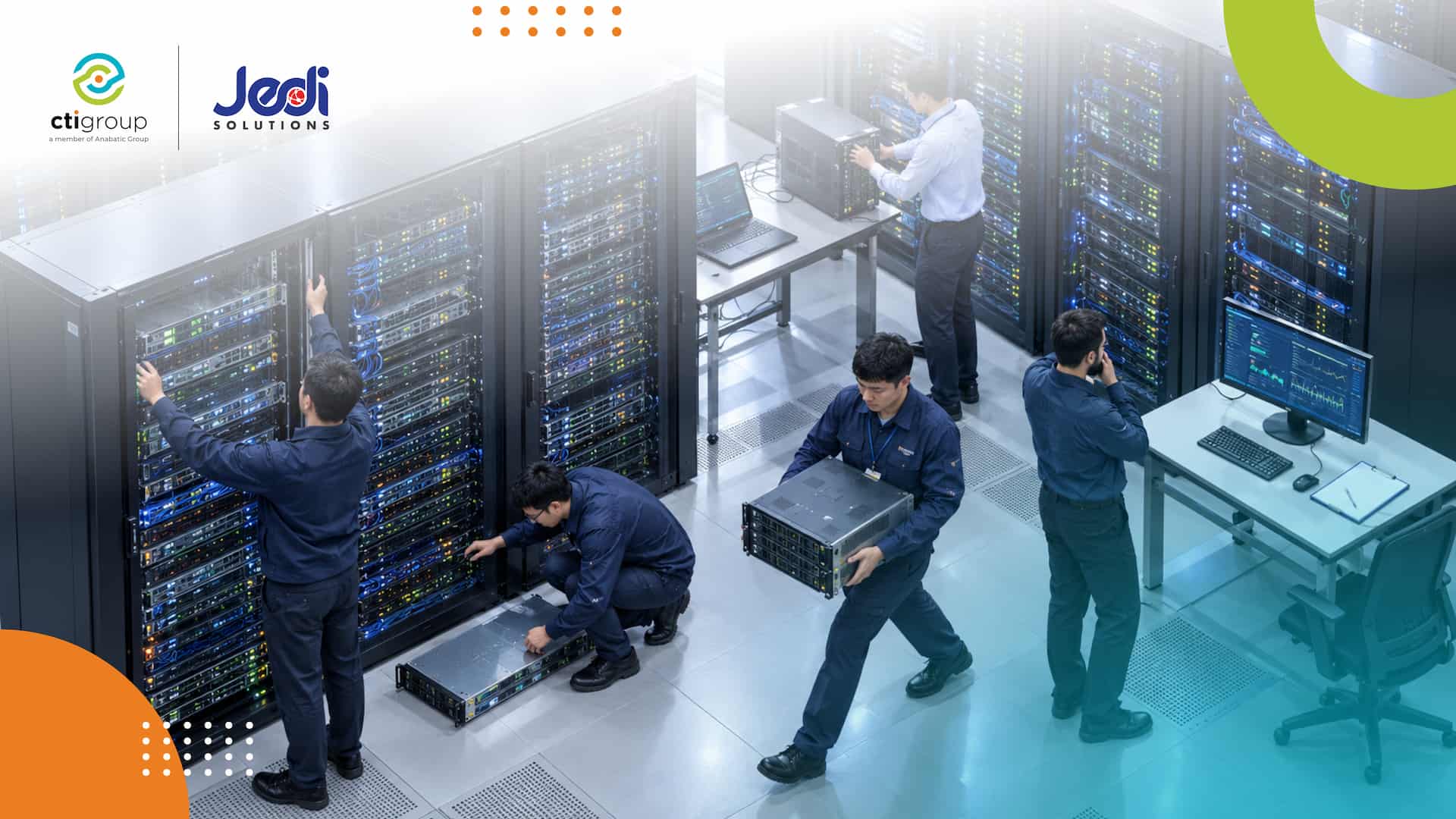
As digital transformation accelerates, businesses are increasingly dependent on reliable IT infrastructure. The growing use of business applications, digital services, data, and complex computing workloads has made data centers a critical part of day-to-day operations.
However, building and managing a data center in-house requires significant investment and resources. Businesses need to provide facilities, power and cooling systems, network infrastructure, security, IT equipment, and operational teams to keep the entire environment running efficiently.
Jedi Data Center as a Service (DCaaS) offers a more flexible approach. Through this service model, businesses can access data center facilities and infrastructure based on their needs without having to build and manage the entire environment themselves.
What Is Jedi Data Center as a Service?
Jedi Data Center as a Service (DCaaS) is a service model that provides data center facilities and infrastructure based on business requirements. It can include colocation, rack space, power, cooling systems, network connectivity, security, and data center operational support.
Unlike the traditional approach, where businesses are responsible for owning and operating their own data center, DCaaS allows them to leverage infrastructure managed by a service provider.
This approach gives businesses greater flexibility to adjust their data center capacity and services as their IT and business needs to evolve, whether business growth, service expansion, or changing infrastructure requirements.
Benefits of Jedi Data Center as a Service
1. Greater Infrastructure Flexibility
Jedi DCaaS allows businesses to adjust their data center capacity and space based on operational requirements. This flexibility can support growing businesses, service expansion, and changing IT capacity needs.
2. More Efficient Investment and Operations
Building a data center requires significant upfront investment as well as ongoing operational costs. With DCaaS, businesses can leverage existing facilities without having to build and manage the entire data center infrastructure themselves.
3. Reliable Infrastructure
Data center reliability depends on multiple systems working together to maintain operational continuity. Jedi provides redundant power and cooling systems, monitoring, network infrastructure, and other supporting facilities based on the selected service.
4. Integrated Security
Data center security covers both physical facilities and infrastructure. Jedi DCaaS provides access controls, 24×7 CCTV monitoring, and mechanical or biometric locking systems that can be configured based on customer requirements.
5. Let IT Teams Focus on the Business
By having part of their infrastructure management handled by a service provider, internal IT teams can focus more on activities that directly support the business, including application development, digital services, innovation, and data management.
Also Read: Meet Bonree ONE: AI Full-Stack Observability Solution for Modern IT Operations
What to Consider Before Using DCaaS
While DCaaS offers greater flexibility, implementation still requires careful planning. Businesses should evaluate several factors before selecting a service, including:
- Capacity and space requirements
- Data center location
- Network connectivity
- Security and access control
- Service availability
- Infrastructure scalability
- Technical and operational support
- Service Level Agreement (SLA)
- Data compliance and governance
Businesses should also clearly understand how responsibilities are divided between the customer and service provider. Clear responsibilities help ensure that infrastructure management, security, maintenance, and incident response can be handled effectively.
Components of Jedi DCaaS
Jedi DCaaS provides a range of services that can be tailored to a company’s infrastructure, IT architecture, and operational requirements.
Colocation
Colocation provides dedicated space for businesses to host their servers and IT equipment within Jedi data center facilities. Jedi offers three colocation options based on space, privacy, and security requirements.
Shared
Shared Room provides a flexible and economical colocation option, starting from half a rack. Customers share the room with other tenants, making this option suitable for businesses with relatively small infrastructure requirements that do not require a large dedicated space.
Each rack is still equipped with security measures, including mechanical or biometric locking systems based on customer requirements.
Caged
Caged Colocation provides a private space within the shared room for customers that require greater privacy as well as higher security and compliance requirements.
Jedi offers two size options:
- Size S: accommodates up to 6 server racks
- Size M: accommodates up to 12 server racks
For requirements exceeding 12 racks, customers can consult further with the JEDI team.
Private Suite
Private Suite provides a fully enclosed area that is separated from other tenants. This option is designed for customers that require dedicated space with a higher level of privacy and security.
All Jedi colocation options are supported by essential data center facilities, including redundant power systems, redundant cooling systems, 24×7 CCTV monitoring, and mechanical or biometric security systems.
Network Connectivity
Jedi provides interconnection services to support connectivity between data centers, offices, cloud environments, and other locations. Provider options can be tailored to the customer’s connectivity requirements.
In addition to local and cloud connectivity, Jedi also provides inter-data center connectivity across locations worldwide when required. For B2B connectivity, Jedi has established partnerships with more than 50 ISPs in Indonesia, providing businesses with a range of connectivity options based on their requirements.
Migration
Jedi provides data center migration services to help businesses move their IT infrastructure from an existing facility to a new data center. The service covers migration supervision, cable procurement and organization including labelling, and the relocation of IT assets.
The migration process is managed in a structured manner, starting with the shutdown of applications, operating systems, and hardware. Jedi then handles the relocation of IT equipment to the new data center and ensures that the assets are brought back into operation.
This support helps businesses manage infrastructure relocation in a more coordinated and controlled manner.
Operation
To support ongoing data center operations, Jedi provides infrastructure monitoring and management services through Network Operation Center (NOC) and Data Center Operator (DCO) personnel.
Jedi also provides monitoring tools, eliminating the need for customers to make additional investments in monitoring solutions. Monitoring is conducted 24×7 to provide continuous visibility into the condition of the infrastructure.
With the support of its NOC and DCO teams, Jedi provides a data center uptime SLA of up to 99.98%. Each service component can be tailored to the company’s capacity requirements, IT architecture, application criticality, and target service availability.
Jedi Data Center Certifications and Compliance
Data center requirements are not limited to capacity and performance. Security and compliance are also essential considerations. All Jedi Data Center Colocation facilities are certified to support regulatory compliance requirements.
Jedi holds several certifications and standards, including:
Tier III
Tier III is a data center standard that supports maintenance or replacement of components without shutting down the main system, also known as concurrently maintainable.
The standard uses multiple power paths and supports 99.982% availability, with maximum downtime of approximately 1.6 hours per year.
ISO 27001
ISO 27001 is an international standard for an Information Security Management System (ISMS). It defines requirements for establishing, implementing, maintaining, and continually improving an organization’s information security management system.
PCI DSS
The Payment Card Industry Data Security Standard (PCI DSS) is a global security standard designed to help protect payment cardholder data against risks such as theft, misuse, and unauthorized access.
Jedi DCaaS as Part of a Digital Transformation Strategy
Data centers are no longer simply facilities for housing servers. In today’s digital ecosystem, they provide the foundation for a wide range of IT requirements, from business applications and cloud services to connectivity, data analytics, and artificial intelligence.
Through Jedi Data Center as a Service, businesses can access data center infrastructure that can be tailored to their requirements without having to build their entire data center capabilities in-house.
From colocation, network connectivity, migration, to operation, Jedi provides a range of services to support different infrastructure and operational requirements. With the right data center infrastructure and service model, businesses can build a more flexible and reliable foundation to support their continued growth in the digital era.
Looking to learn more about Jedi Data Center as a Service and find the right services for your infrastructure needs? Contact the Jedi Solution team to discuss your requirements. As part of CTI Group, Jedi is ready to support your digital infrastructure needs with flexible and reliable data center solutions.
Author: Mochammad Taufik – Technical Manager Jedi Solutions
Editor: Wilsa Azmalia Putri – Content Writer CTI Group
